Ember-resistant venting with Vulcan Vents
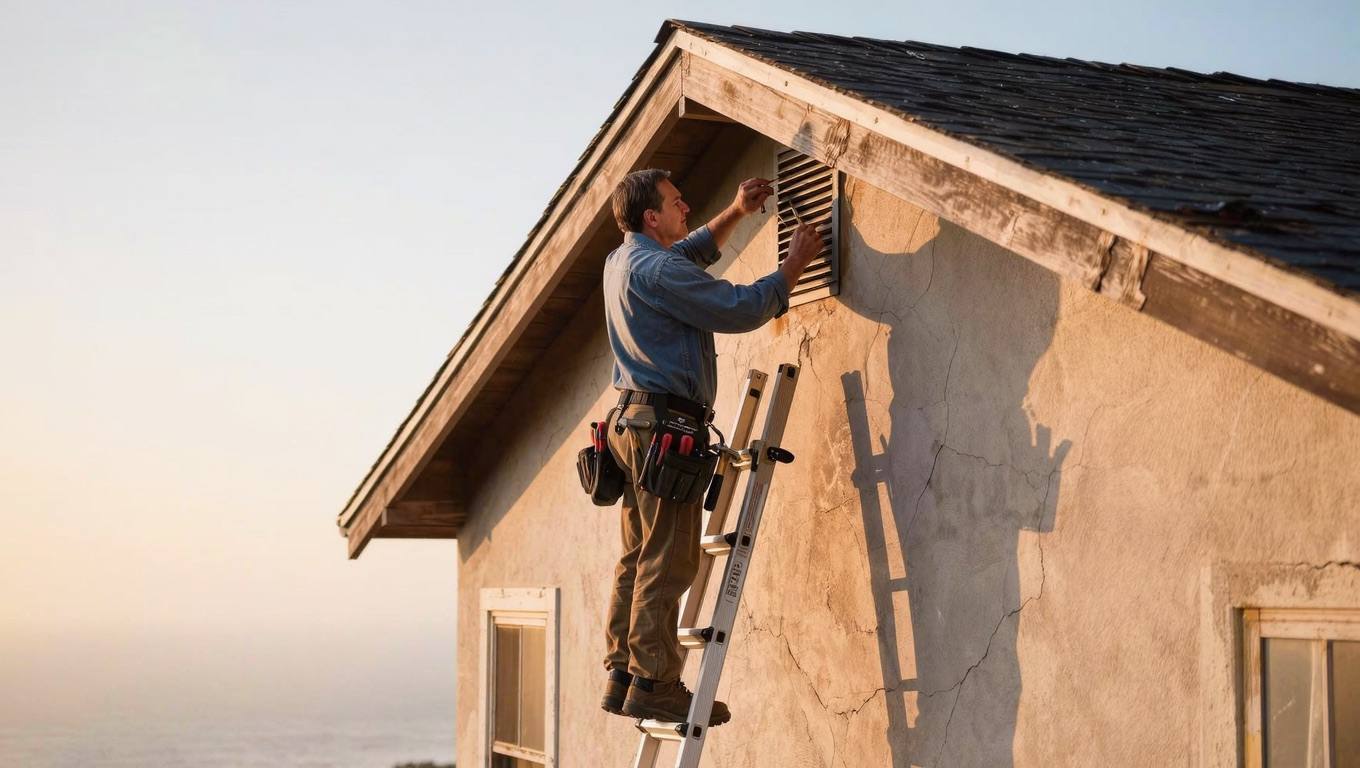
Vents are the most common way a house ignites from the inside. Embers ride the wind through attic, eave, gable, and foundation vents and land on framing and insulation. We replace them with Vulcan ember-resistant vents, which use a honeycomb mesh with an intumescent coating that expands and closes the vent under heat. Same airflow on a normal day, sealed when it counts. Most houses are a one day job.
Window and door replacement
Where the windows are old, single pane, or in wood frames that have dried out for thirty years, replacement is the retrofit. We supply and install tempered multi-pane units in ignition resistant frames and do the whole opening: sill pan, flashing, and the wall on both sides. Exterior doors and sliders the same way. See windows and doors.
Safety film on existing glass
If you are keeping your windows, a clear 8 mil or thicker safety film applied to the interior lite holds broken glass in place after the outer pane fails, much as a laminated interlayer does. That keeps embers and radiant heat out of the room when the glass cracks. It is a hardening retrofit, not a code-rated laminated unit, and we say so. Film applied to a sealed insulated unit can affect the window maker's glass warranty; the film installer's warranty stands in from then on. Candidate products are 3M Ultra Prestige and Scotchshield, Madico SafetyShield, and LLumar Magnum, installed by a certified film installer working with us.
Eaves, gutters, and the roof edge
Open eaves collect embers against the rafters. We enclose them in noncombustible soffit material, add bird stops at the roof edge, install metal gutter guards so debris cannot pile up and ignite, and seal the gap between the roof deck and the fascia. On a Class A roof that is often all the roof needs.
The five foot zone and the fence connection
Nothing combustible in the first five feet: no mulch, no wood planters, no wood fence tied into the wall. We replace the fence section that touches the house with aluminum or steel and a noncombustible return, and put gravel, pavers, or concrete on the ground in that band. This is the item most homeowners miss and the one the adopted Zone 0 rules target first. Details on Zone Zero fences and gates.
Garage door and cladding
A wood garage door is the largest combustible panel on most houses. Swapping it for a steel or aluminum door with sealed weatherstripping is a one day retrofit. See garage doors. Cladding is the biggest job on the list, so it comes last unless the existing siding is wood shingle, in which case it moves up.
How a retrofit runs
- Site walk. One lap around the outside. We photograph every vent, eave, opening, and the fence connection.
- The list. Every item in order of ember risk per dollar, each with a price. You decide how far down to go now.
- The work. Small items in a day or two. Bigger items scheduled around your life, not ours.
- Documentation. Before and after photos and product data for your insurer. See fire hardening for the insurance programs that recognize the work.
Questions we get about fire retrofits
What is the first thing to fix on a standing home?
Vents. Embers enter through attic, eave, and foundation vents long before flame reaches the wall. Swapping them for ember-resistant vents is a one day job on most houses and it removes the most common way a home ignites from the inside.
Does safety film make my windows fire rated?
No. Film bonded to the interior glass holds broken glass in place the way a laminated interlayer does, which keeps embers and heat out after the outer pane fails. It is a hardening retrofit, not a code-rated laminated unit. Film on a sealed insulated unit can also affect the window maker's glass warranty; the film installer's warranty covers it from then on. We say that up front.
Can retrofits be done in stages?
Yes, and they should be. We hand you the list in order of ember risk per dollar and you work down it as budget allows. Vents and the five foot zone first, then eaves and gutters, then the garage door, then cladding and roof.